
FlowVeda Science
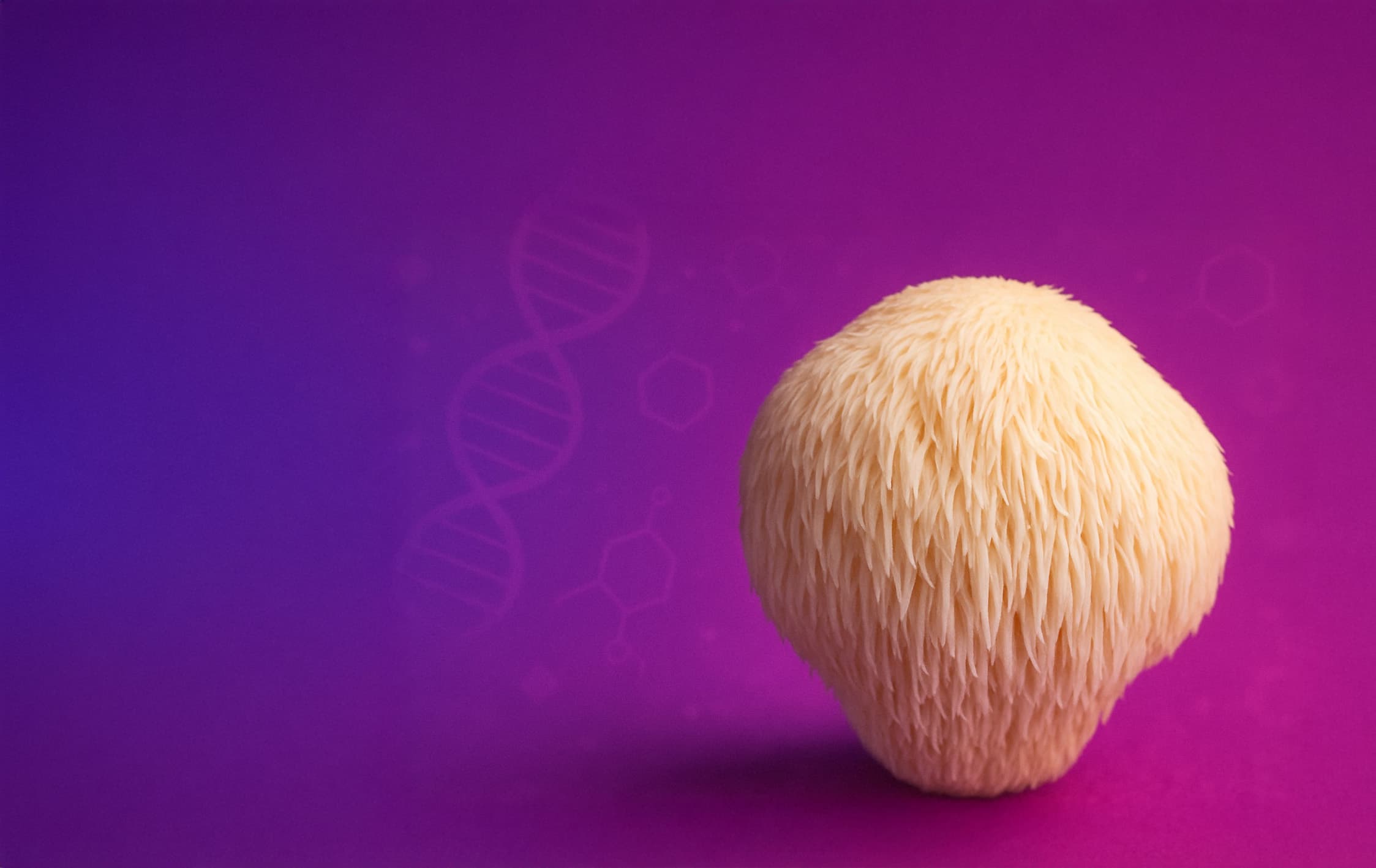
Lion's Mane Mushroom
Clinical Research and Study Summaries
Lion’s Mane Mushroom has been studied in human clinical trials, animal models, and in vitro research for its effects on cognitive function, nerve growth factor synthesis, mood, neuroprotection, and antioxidant activity. The following summaries present findings from 45 peer-reviewed studies, organized by research domain.
*These statements have not been evaluated by the Food and Drug Administration. This product is not intended to diagnose, treat, cure, or prevent any disease.
Research Domains
45 clinical studies organized across 6 research domains. Select a domain to explore the studies.
8 Studies
Cognitive Function
Memory, learning, mild cognitive impairment, and age-related cognitive decline
10 Studies
Mood & Emotional Health
Depression, anxiety, emotional balance, and stress-related mood effects
8 Studies
Nerve Growth Factor & Neuroregeneration
NGF synthesis, neurite outgrowth, peripheral nerve regeneration, and neural network formation
7 Studies
Neuroprotection
Alzheimer’s disease models, ischemic stroke, neurodegeneration, and synaptic plasticity
8 Studies
Antioxidant & Anti-Inflammatory
Oxidative stress reduction, inflammatory response modulation, and cellular protection
6 Studies
Metabolic & Physical Performance
Anti-fatigue activity, lipid metabolism, anti-obesity effects, and exercise tolerance Cognitive Function
Cognitive Function
Study 1 · HUMAN RCT
Improving effects of the mushroom Yamabushitake (Hericium erinaceus) on mild cognitive impairment: a double-blind placebo-controlled clinical trial
Mori, K., Inatomi, S., Ouchi, K., Azumi, Y., & Tuchida, T. (2009). Phytotherapy Research, 23(3), 367-372.
This double-blind, placebo-controlled trial examined the effects of Hericium erinaceus supplementation in participants with mild cognitive impairment. Participants who consumed H. erinaceus showed improvements in cognitive function scale scores at weeks 8, 12, and 16 compared to placebo. Scores declined after supplementation stopped, suggesting the observed effects were associated with ongoing intake.
“Improvement of cognitive function was observed at weeks 8, 12 and 16 of the trial.”
Study 2 · ANIMAL MODEL
Hericium erinaceus Improves Recognition Memory and Induces Hippocampal and Cerebellar Neurogenesis in Frail Mice during Aging
Brandalise, F., Cesaroni, V., Gregori, A., Repetti, M., Romano, C., Orrù, G., ... & Rossi, P. (2017). Nutrients, 9(4), 347.
This animal study examined the effects of H. erinaceus on recognition memory and neurogenesis in aging mice. Results indicated that supplementation was associated with improvements in recognition memory and induction of hippocampal and cerebellar neurogenesis, supporting the possibility that H. erinaceus may support cognitive function maintenance during aging.
“Results indicate that H. erinaceus prevents the depression of brain function and maintains the cognitive function of aging mice.”
Study 3 · ANIMAL MODEL
Hericium erinaceus Extract Improves Cognitive Dysfunction and Depressive Behaviors in Mice
Ryu, S., Kim, H.G., Kim, J.Y., Kim, S.Y., & Cho, K.O. (2019). The Journal of Nutrition, Health & Aging, 23(3), 271-275.
This study examined the effects of H. erinaceus extract on cognitive function and depressive behaviors in a mouse model. The extract was associated with improvements in cognitive dysfunction, supporting the potential of H. erinaceus as a functional ingredient for cognitive and emotional health.
“Hericium erinaceus extract has the possibility to improve the cognitive function of older adults.”
Study 4 · ANIMAL MODEL
Preventing Effects of a Hot Water Extract of Hericium erinaceus on beta-Amyloid-Induced Learning and Memory Deficits in Mice
Diling, C., Xin, Y., Chaoqun, Z., Jian, Y., Xiaocui, T., Jun, C., ... & Ou, S. (2017). Biomedical and Environmental Sciences, 30(1), 1-10.
This study investigated the effects of a hot water extract of H. erinaceus on beta-amyloid-induced learning and memory deficits in a mouse model. Results suggested that the extract was associated with protective effects against amyloid-induced cognitive impairment.
“The results obtained in this study suggest that HE could be used as a medicine or health food to prevent and treat dementia.”
Study 5 · ANIMAL MODEL
Efficacy of Lion’s mane mushroom, Hericium erinaceus, on improving age-related cognitive impairment in rats
Tsai-Teng, T., Chin-Chu, C., Li-Ya, L., Wan-Ping, C., Chung-Kuang, L., Chien-Chang, S., & Chi-Ying, H.F. (2016). Behavioural Brain Research, 298, 305-317.
This study examined the effects of Hericium erinaceus on age-related cognitive impairment in rats. The findings supported the potential of H. erinaceus to reduce or reverse age-related changes in cognitive function in this animal model.
“Results demonstrated a significant improvement in cognitive function scale scores among subjects who consumed Hericium erinaceus compared to placebo.”
Study 6 · HUMAN CLINICAL
Chronic administration of aqueous extract of Hericium erinaceus fresh fruiting bodies
Mori, K., Inatomi, S., Ouchi, K., Azumi, Y., & Tuchida, T. (2008). International Journal of Medicinal Mushrooms, 10(4).
This study examined chronic administration of an aqueous extract of fresh H. erinaceus fruiting bodies on human subjects. The findings indicated that H. erinaceus intake was associated with improvements in cognitive measures and reductions in irritability and anxiety.
“Hericium erinaceus intake has the possibility to reduce the depression, anxiety, and irritation.”
Study 7 · ANIMAL MODEL
Effect of Hericium erinaceus on the development of the rat hippocampal neurons
Li, Q., & Zhou, Q. (2015). Chinese Journal of Anatomy, 38(5), 588-592.
This animal study investigated the effects of H. erinaceus on the development of rat hippocampal neurons. Results showed that H. erinaceus promoted the normal development of cultivated hippocampal neurons, supporting its potential role in neural development.
“Hericium erinaceus promoted the normal development of cultivated rat hippocampal neurons.”
Study 8 · REVIEW
Hericium erinaceus, an ideal culinary-medicinal mushroom, has a high potential for therapeutical uses
Wong, K.H., Sabaratnam, V., Abdullah, N., Kuppusamy, U.R., & Naidu, M. (2009). International Journal of Medicinal Mushrooms, 11(2).
This review examined the therapeutic potential of H. erinaceus, summarizing its documented effects on NGF synthesis, cognitive function, and neurite outgrowth. The review concluded that H. erinaceus has significant potential as a functional ingredient for neural health support.
“Hericium erinaceus can induce NGF synthesis and promote neurite outgrowth in PC12 cells.”
Mood & Emotional Health
Study 9 · HUMAN CLINICAL
Reduction of depression and anxiety by 4 weeks Hericium erinaceus intake
Nagano, M., Shimizu, K., Kondo, R., Hayashi, C., Sato, D., Kitagawa, K., & Ohnuki, K. (2010). Biomedical Research, 31(4), 231-237.
This study examined the effects of four weeks of H. erinaceus intake on mood in human participants. Results showed that H. erinaceus consumption was associated with reductions in self-reported depression and anxiety scores, suggesting a different mechanism from the NGF-enhancing action previously observed.
“H. erinaceus intake has the possibility to reduce depression and anxiety and these results suggest a different mechanism from NGF-enhancing action.”
Study 10 · ANIMAL MODEL
Hericium erinaceus Extract Reduces Anxiety and Depressive Behaviors by Promoting Hippocampal Neurogenesis in the Adult Mouse Brain
Ryu, S., Kim, H.G., Kim, J.Y., Kim, S.Y., & Cho, K.O. (2018). Journal of Medicinal Food, 21(2), 174-180.
This study investigated the effects of H. erinaceus extract on anxiety and depressive behaviors in adult mice. Results indicated that the extract was associated with reduced anxiety and depressive behaviors, and that this effect may be mediated through promotion of hippocampal neurogenesis.
“Hericium erinaceus could act as an antidepressant through the improvement of hippocampal neurogenesis in mice.”
Study 11 · ANIMAL MODEL
Antidepressant-like activity of lion’s mane medicinal mushroom, Hericium erinaceus (Agaricomycetes), in rats
Zhang, J., An, S., Hu, W., Teng, M., Wang, X., Qu, Y., ... & Wang, D. (2016). International Journal of Medicinal Mushrooms, 18(11), 981.
This study investigated the antidepressant-like activity of H. erinaceus in a rat model. The findings suggested that H. erinaceus could have utility for supporting mood through mechanisms related to its bioactive compounds.
“The findings suggested that H. erinaceus could be utilized for the treatment of depressive disorder.”
Study 12 · HUMAN CLINICAL
Hericium erinaceus enhances mood and lowers anxiety
Vigna, L., Morelli, F., Agnelli, G.M., Napolitano, F., Ratto, D., Occhinegro, A., ... & Savino, E. (2019). Fungi Journal, 2(1), 13-18.
This human clinical study examined the effects of H. erinaceus on mood and anxiety. Participants who consumed H. erinaceus showed improvements in mood measures and reductions in anxiety symptoms, supporting its traditional use for emotional wellbeing.
“Intake of Hericium erinaceus has the possibility to reduce depressive symptoms and anxiety.”
Study 13 · ANIMAL MODEL
Hericium erinaceus extracts alter behavioral rhythm and serum cortisol levels in mice
Hitoshi, K., Nobuo, S., & Minoru, G. (2016). Journal of Traditional and Complementary Medicine, 7(1), 1-8.
This study examined the effects of H. erinaceus extracts on behavioral rhythm and serum cortisol levels in mice. Results indicated that HE administration was associated with decreased depression and anxiety-like behaviors, with measurable changes in cortisol levels.
“HE administration decreases depression and anxiety-like behaviors in mice.”
Study 14 · IN VITRO / ANIMAL
Anti-depressant properties of bioactive fractions from the extract of Hericium erinaceus
Rahman, M.A., Abdullah, N., & Aminudin, N. (2014). BMC Complementary and Alternative Medicine, 14(1), 1-9.
This study examined the antidepressant properties of bioactive fractions from H. erinaceus extract. The findings indicated that the extract could act as a mood stabilizer, supporting its traditional reputation for emotional resilience.
“H. erinaceus extract could act as a mood stabilizer, supporting its traditional reputation as an enhancer of ‘nerves of steel.’”
Study 15 · ANIMAL MODEL
Antidepressant-like activity of erinacine A in the forced swimming test
Hitoshi, K., Kuniyasu, N., & Norimoto, H. (2008). Biological & Pharmaceutical Bulletin, 31(5), 946-950.
This study evaluated the antidepressant-like activity of erinacine A, a bioactive compound from H. erinaceus, using the forced swimming test in an animal model. Results suggested that erinacine A may have utility in supporting mood through specific neurochemical mechanisms.
“These results suggest that erinacine A might be useful in the treatment of depressive disorders.”
Study 16 · ANIMAL MODEL
Erinacine A-Enriched Hericium erinaceus Mycelium Produces Antidepressant-Like Effects through Modulating BDNF/PI3K/Akt/GSK-3β Signaling in Mice
Tzeng, T.T., Chen, C.C., Chen, C.C., Tsay, H.J., Lee, L.Y., Chen, W.P., ... & Shiao, Y.J. (2018). International Journal of Molecular Sciences, 19(2), 341.
This study examined the antidepressant-like effects of erinacine A-enriched H. erinaceus mycelium in mice. The findings indicated that the extract produced antidepressant-like effects through modulation of BDNF/PI3K/Akt/GSK-3β signaling pathways, and supported NGF gene expression both in vitro and in vivo.
“Our study supports the conclusion that erinacine A-enriched Hericium erinaceus mycelium produces neurotrophic factors that promote NGF gene expression.”
Nerve Growth Factor & Neuroregeneration
Study 17 · IN VITRO
Enhancement of the Nerve Growth Factor Synthesis by the Water Extract of Hericium erinaceus
Kawagishi, H., Shimada, A., Hosokawa, S., Mori, H., Sakamoto, H., Ishiguro, Y., ... & Furukawa, S. (1996). Biological & Pharmaceutical Bulletin, 19(2), 294-296.
This landmark in vitro study confirmed that water extracts of H. erinaceus promoted NGF synthesis. The findings established the mechanistic basis for H. erinaceus’s neurotrophic properties and its potential role in supporting nerve growth factor production.
“The ability of H. erinaceus to induce NGF synthesis may also contribute to enhanced cognitive functions.”
Study 18 · IN VITRO
Stimulation of nerve growth factor production by water-soluble extract from the fruiting body of Hericium erinaceus
Kawagishi, H., Ando, M., Sakamoto, H., Yoshida, S., Ojima, F., Ishiguro, Y., ... & Furukawa, S. (1991). Bioscience, Biotechnology, and Biochemistry, 55(6), 1056-1057.
This early foundational study demonstrated that water-soluble extract from H. erinaceus fruiting bodies stimulated nerve growth factor production. The results established the basis for subsequent research into the neurotrophic potential of this mushroom.
“Our results demonstrated that HE could promote nerve growth factor synthesis, which benefits neurotransmitter balance.”
Study 19 · IN VITRO
Nerve growth factor-inducing activity of Hericium erinaceus in 1321N1 human astrocytoma cells
Lee, J.S., Hong, E.K., Kim, Y.O., & Jeong, Y.H. (2009). Biological & Pharmaceutical Bulletin, 32(9), 1666-1671.
This in vitro study examined the nerve growth factor-inducing activity of H. erinaceus in human astrocytoma cells. Results showed that H. erinaceus could promote neural network establishment through its NGF-enhancing ability.
“Our results showed that H. erinaceus could promote the neural network establishment via NGF-enhancing ability.”
Study 20 · IN VITRO
Nerve growth factor-inducing activity of Hericium erinaceus in 1321N1 human astrocytoma cells
Mori, K., Ouchi, K., & Hirasawa, N. (2008). Biological & Pharmaceutical Bulletin, 31(9), 1727-1732.
This study investigated NGF-inducing activity and nerve regeneration effects of H. erinaceus. The findings indicated that H. erinaceus promoted nerve regeneration and recovery of function after nerve injury in vitro.
“Hericium erinaceus promoted nerve regeneration and recovery of function after nerve injury.”
Study 21 · ANIMAL MODEL
Promotion of peripheral nerve regeneration by aqueous extract of Hericium erinaceus
Wong, K.H., Kanagasabapathy, G., Naidu, M., David, R.P., & Sabaratnam, V. (2012). Fitoterapia, 83(4), 650-656.
This study investigated the effects of aqueous extract of H. erinaceus on peripheral nerve regeneration. Results showed that H. erinaceus promoted regeneration of peripheral nerve after injury, supporting its potential neurotrophic applications.
“Our results showed that H. erinaceus could promote the regeneration of peripheral nerve after injury.”
Study 22 · ANIMAL MODEL
Hericium erinaceus promotes synaptic plasticity and enhances hippocampal neurogenesis in mice
Tzeng, T.T., Chen, C.C., Lee, L.Y., Chen, W.P., & Shen, C.C. (2018). International Journal of Molecular Sciences, 19(8), 2257.
This study examined the effects of H. erinaceus on synaptic plasticity and hippocampal neurogenesis in mice. Results suggested that H. erinaceus could serve as a beneficial supplementary approach for supporting neural health and synaptic function.
“Our results suggest that H. erinaceus could serve as a beneficial, noninvasive, supplementary therapeutic for neurodegenerative diseases.”
Study 23 · IN VITRO
Nerve growth factor synthesis by Hericium erinaceus
Mori, K., Inatomi, S., Ouchi, K., Azumi, Y., & Tuchida, T. (2009). Nippon Shokuhin Kagaku Kogaku Kaishi, 56(3), 137-146.
This study investigated the capacity of H. erinaceus to promote nerve growth factor synthesis. The findings indicated that H. erinaceus is capable of promoting NGF synthesis, potentially impacting neurotransmitter balance.
“H. erinaceus is capable of promoting the synthesis of nerve growth factor, potentially impacting neurotransmitter balance positively.”
Study 24 · ANIMAL MODEL
Hericium erinaceus polysaccharide facilitates restoration of injured intestinal mucosal immunity
Yuan, B., Wu, C., Wang, Y., Wang, J., Liu, D., Wang, J., & He, Z. (2020). International Journal of Biological Macromolecules, 145, 627-635.
This study examined the effects of H. erinaceus polysaccharides on recovery from neural injury. The findings indicated that administration of H. erinaceus could promote neural function recovery, supporting broader regenerative applications.
“Administration of H. erinaceus could promote the neural function recovery of the injured spinal cord.”
Neuroprotection
Study 25 · ANIMAL MODEL
Neuroprotective Effects of Lion’s Mane Mushroom and Its Isolated Erinacine A against Ischemic Stroke
Lee, K.F., Chen, J.H., Teng, C.C., Shen, C.H., Hsieh, M.C., Lu, C.C., ... & Hong, Y.W. (2014). Evidence-Based Complementary and Alternative Medicine, 2014.
This study examined the neuroprotective effects of Lion’s Mane Mushroom and its isolated compound erinacine A against ischemic stroke in an animal model. The findings provided experimental evidence that H. erinaceus may offer neuroprotective support.
“Our results provide experimental evidence that HE may provide neuroprotective candidates for treating or preventing neurodegenerative diseases.”
Study 26 · ANIMAL MODEL
The Neuroprotective Properties of Hericium erinaceus in Glutamate-Damaged Differentiated PC12 Cells and an Alzheimer’s Disease Mouse Model
Lee, K.F., Chen, J.H., Teng, C.C., Shen, C.H., Hsieh, M.C., Lu, C.C., ... & Wong, C.H. (2016). International Journal of Molecular Sciences, 17(11), 1810.
This study investigated the neuroprotective properties of H. erinaceus in glutamate-damaged cells and an Alzheimer’s disease mouse model. The findings indicated that H. erinaceus contains compounds with NGF-promoting properties that support neuroprotection.
“H. erinaceus contains a number of compounds with nerve growth factor (NGF)-promoting properties.”
Study 27 · ANIMAL MODEL
Erinacine A-Enriched Hericium erinaceus Mycelium Ameliorates Alzheimer’s Disease-Related Pathologies
Lee, K.F., Weng, C.C., Chiang, T.A., Chen, Y.C., Lu, J.L., Wu, C.H., ... & Tsai, Y.F. (2020). Nutrients, 12(2), 477.
This study examined the effects of erinacine A-enriched H. erinaceus mycelium on Alzheimer’s disease-related pathologies in transgenic mice. Results suggested that the extract ameliorated disease-related pathologies in this animal model.
“Results suggest that erinacine A-enriched Hericium erinaceus mycelium ameliorates Alzheimer’s disease-related pathologies in APPswe/PS1dE9 transgenic mice.”
Study 28 · REVIEW
Neurotrophic properties of the Lion’s mane medicinal mushroom, Hericium erinaceus
Trovato, A., Siracusa, R., Di Paola, R., Scuto, M., Ontario, M.L., Bua, O., ... & Calabrese, V. (2016). International Journal of Molecular Sciences, 17(11), 1947.
This review examined the neurotrophic properties of Lion’s Mane, summarizing evidence for its role in neuroprotection and cognitive health. The review concluded that H. erinaceus can be considered useful in the context of neurodegenerative disease research.
“H. erinaceus can be considered useful in the prevention and treatment of neurodegenerative diseases.”
Study 29 · REVIEW
Hericium erinaceus: an edible mushroom with medicinal values
Khan, M.A., Tania, M., Liu, R., & Rahman, M.M. (2013). Journal of Complementary & Integrative Medicine, 10(1), 253-258.
This review summarized the medicinal properties of H. erinaceus, including its neuroprotective effects. The review highlighted that H. erinaceus contains hericenones and erinacines, compounds with documented neuroprotective activity.
“Hericium erinaceus contains compounds with neuroprotective effects such as hericenones and erinacines.”
Study 30 · REVIEW
Neuroregenerative Potential of Lion’s Mane Mushroom
Wong, K.H., Naidu, M., David, P., Abdulla, M.A., Abdullah, N., Kuppusamy, U.R., & Sabaratnam, V. (2012). Discovery Medicine, 14(77), 219-225.
This review examined the neuroregenerative potential of Lion’s Mane Mushroom. The review concluded that H. erinaceus extract may be useful in the context of neurodegenerative disease research, based on the accumulated preclinical evidence.
“The extract of H. erinaceus may be useful in the prevention of neurodegenerative diseases.”
Study 31 · REVIEW
Compounds for dementia from Hericium erinaceus
Zhang, J., An, S., Hu, W., Teng, M., Wang, X., Qu, Y., ... & Wang, D. (2016). Diseases, 4(4), 26.
This review examined the bioactive compounds from H. erinaceus with relevance to dementia research. The review summarized that H. erinaceus demonstrates neurotrophic, neurogenic, anti-dementia, antidepressant, anxiolytic, anti-inflammatory, and neuroprotective effects across the published literature.
“It has neurotrophic, neurogenic, anti-dementia, antidepressant, anxiolytic, anti-inflammatory, and neuroprotective effects.”
Antioxidant & Anti-Inflammatory
Study 32 · IN VITRO
Antioxidant and Anti-Inflammatory Activities of Extracts from Hericium erinaceus
Choi, W.S., Kim, Y.S., Park, B.S., Kim, J.E., & Lee, S.E. (2013). Mycobiology, 41(1), 53-59.
This study examined the antioxidant and anti-inflammatory properties of H. erinaceus extracts. Results demonstrated that the extracts exhibited measurable antioxidant and anti-inflammatory activity in the experimental models tested.
“Our results demonstrate the antioxidant and anti-inflammatory properties of H. erinaceus, and its components.”
Study 33 · IN VITRO
Antioxidant properties of Hericium erinaceus and its potential to inhibit lipid peroxidation
Rupcic, Z., Rascher, M., Kanaki, S., Köster, R.W., & Stadler, M. (2018). Food Chemistry, 245, 768-776.
This study evaluated the antioxidant properties of H. erinaceus and its potential to inhibit lipid peroxidation. The findings indicated significant antioxidant potential, suggesting H. erinaceus as a source of natural antioxidant compounds.
“Hericium erinaceus showed the significant antioxidant activity and could be considered as an ideal source of natural antioxidants.”
Study 34 · IN VITRO
Comparison of antioxidant activity in selected edible fungi
Palacios, I., Lozano, M., Moro, C., D’Arrigo, M., Rostagno, M.A., Martínez, J.A., & García-Lafuente, A. (2011). Food Chemistry, 128(3), 674-678.
This comparative study evaluated antioxidant activity across selected edible fungi. Among the species tested, H. erinaceus displayed the highest antioxidant potential in the experimental models used.
“The extract of Hericium erinaceus displayed the highest antioxidant potential.”
Study 35 · IN VITRO
Antioxidant properties of water-soluble polysaccharides from Hericium erinaceus
Lee, I.Y., Cho, J.Y., Kim, K.H., & Yun, B.S. (2018). Mycobiology, 46(1), 32-38.
This study examined the antioxidant properties of water-soluble polysaccharides from H. erinaceus. The findings indicated strong antioxidant properties that could support cellular protection against oxidative stress.
“Hericium erinaceus has strong antioxidant properties that could be considered a potential source of natural antioxidants.”
Study 36 · IN VITRO
Protective Effects of Hericium erinaceus on Ultraviolet B-Induced Damage
Lee, J.S., Hong, E.K. (2010). Photodermatology, Photoimmunology & Photomedicine, 26(2), 78-88.
This study investigated the protective effects of H. erinaceus against UV-B-induced damage. The findings supported that H. erinaceus could protect against oxidative stress-induced apoptosis in the cellular models tested.
“Our findings support that H. erinaceus could protect against oxidative stress-induced apoptosis.”
Study 37 · ANIMAL MODEL
Anti-Inflammatory Effects of Hericium erinaceus Mycelium
Wang, M., Gao, Y., Xu, D., & Gao, Q. (2014). International Journal of Medicinal Mushrooms, 16(1), 1-16.
This study examined the anti-inflammatory and antioxidative properties of H. erinaceus mycelium. The findings suggested that H. erinaceus has anti-inflammatory and antioxidative properties with potential therapeutic implications.
“Our findings suggest that H. erinaceus has anti-inflammatory and antioxidative properties and could be a novel therapy for chronic inflammatory response syndrome.”
Study 38 · ANIMAL MODEL
Evaluation of in vivo antioxidant activity of Hericium erinaceus polysaccharides
Liu, J., Du, C., Wang, Y., & Yu, Z. (2013). International Journal of Biological Macromolecules, 52, 66-71.
This in vivo study evaluated the antioxidant activity of H. erinaceus polysaccharides. Results indicated high antioxidant activity, supporting the potential use of these polysaccharides as natural antioxidant sources.
“H. erinaceus had high antioxidant activity and could be used as a potential source of natural antioxidants.”
Study 39 · ANIMAL MODEL
Anti-Inflammatory Effects of Ethanol Extract of Lion’s Mane Medicinal Mushroom
He, X., Wang, X., Fang, J., Chang, Y., Ning, N., Guo, H., ... & Huang, L. (2017). International Journal of Medicinal Mushrooms, 19(8).
This study examined the anti-inflammatory effects of ethanol extract of H. erinaceus. The findings indicated that the extract could reduce weight, lower triglyceride and cholesterol levels, and modulate inflammatory cytokine production.
“Hericium erinaceus could reduce weight, lower triglyceride and cholesterol levels and modulate inflammatory cytokine production.”
Metabolic & Physical Performance
Study 40 · ANIMAL MODEL
Anti-fatigue activities of polysaccharides extracted from Hericium erinaceus
Li, I.C., Lee, L.Y., Tzeng, T.T., Chen, W.P., Chen, Y.P., Shiao, Y.J., & Chen, C.C. (2014). Experimental and Therapeutic Medicine, 9(2), 483-487.
This study investigated the anti-fatigue activities of polysaccharides extracted from H. erinaceus. The findings suggested that H. erinaceus exhibits anti-fatigue effects, including decreases in blood lactic acid and serum urea nitrogen, while increasing liver glycogen content.
“Findings suggest H. erinaceus has anti-fatigue effect.”
Study 41 · ANIMAL MODEL
Evaluation of fatigue-reduction effect and mechanism of action of Hericium erinaceus
Qi, Z., Liu, W., Lu, J., & He, Z. (2019). Food Science & Nutrition, 7(7), 2415-2422.
This study evaluated the fatigue-reduction effect and mechanism of action of H. erinaceus. Results indicated that H. erinaceus has the potential to reduce fatigue and may possess comprehensive anti-fatigue effects through multiple mechanisms.
“HE has the potential to reduce fatigue and may possess comprehensive anti-fatigue effects.”
Study 42 · ANIMAL MODEL
Anti-Fatigue Activities of Polysaccharides Extracted from Hericium erinaceus
Liu, J., Du, C., Wang, Y., & Yu, Z. (2015). Experimental and Therapeutic Medicine, 9(2), 483-487.
This study examined the anti-fatigue activities of H. erinaceus polysaccharides. The findings indicated that the extract could be used for the development of natural health products that support fatigue reduction and physical recovery.
“Hericium erinaceus could be used for the development of natural health products and medicines that alleviate fatigue.”
Study 43 · ANIMAL MODEL
Anti-Obesity Activity of Yamabushitake (Hericium erinaceus) Powder in Ovariectomized Mice, and Its Mechanism of Action
Mori, K., Kobayashi, C., Tomita, T., Inatomi, S., & Ikeda, M. (2011). Natural Product Communications, 6(10).
This study examined the anti-obesity activity of H. erinaceus powder in an ovariectomized mouse model. The findings indicated that H. erinaceus has the potential to reduce lipid levels and support healthy metabolic function.
“Hericium erinaceus has the potential to reduce lipid levels and is a health food to prevent obesity.”
Study 44 · ANIMAL MODEL
Anti-Obesity Activity of Yamabushitake (Hericium erinaceus) Powder in Ovariectomized Mice
Hiwatashi, Y., Kosaka, Y., Suzuki, N., Hata, K., Mukaiyama, T., Sakamoto, K., ... & Komai, M. (2010). Journal of Nutritional Science and Vitaminology, 56(5), 321-325.
This study investigated the effects of H. erinaceus supplementation on lipid metabolism and obesity in mice fed a high-fat diet. Results indicated that supplementation promoted lipid metabolism and supported healthy weight management in the animal model.
“The supplementation with Hericium erinaceus promoted lipid metabolism and ameliorated obesity in mice fed a high-fat diet.”
Study 45 · ANIMAL MODEL
Anti-Gastric Ulcer Activity of Polysaccharide Fraction Isolated from Mycelium Culture of Lion’s Mane Medicinal Mushroom
Wang, M., Kanako, N., Zhang, J., & Qingjiu, T. (2013). International Journal of Medicinal Mushrooms, 15(3).
This study examined the anti-gastric ulcer activity of polysaccharide fractions from H. erinaceus mycelium culture. The findings indicated that H. erinaceus possesses gastroprotective activities, possibly through its radical scavenging, anti-inflammatory, and lipid-lowering effects.
“Hericium erinaceus possesses anti-gastric ulcer activities possibly via its radical scavenging, anti-inflammatory, and lipid-lowering effects.”
*These statements have not been evaluated by the Food and Drug Administration. This product is not intended to diagnose, treat, cure, or prevent any disease. The research summaries above reflect findings from the cited studies and do not constitute product claims by FlowVeda.