
FlowVeda Science
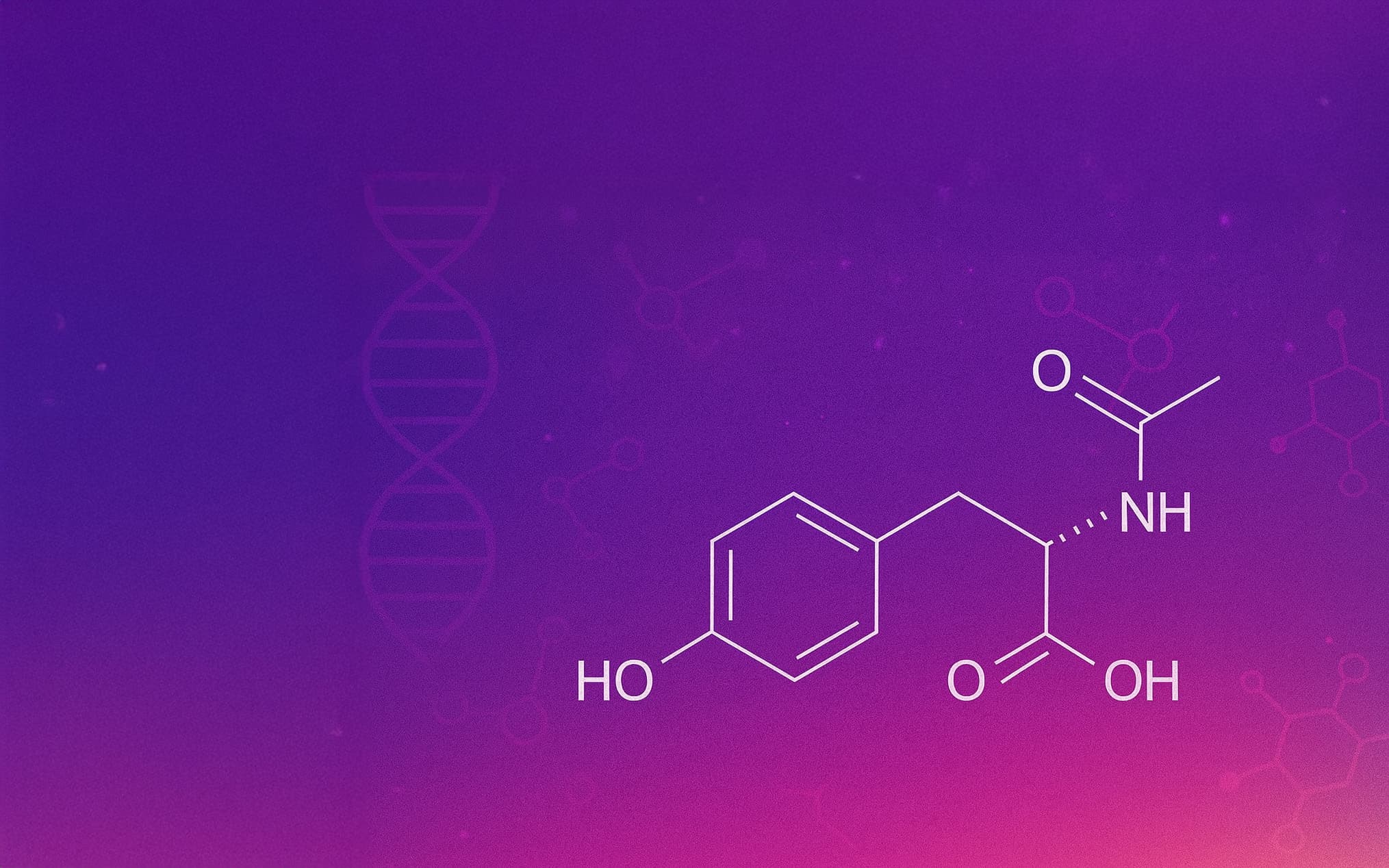
N-Acetyl L-Tyrosine
Clinical Research and Study Summaries
N-Acetyl-L-Tyrosine, a bioavailable form of L-Tyrosine, has been studied in human clinical trials, systematic reviews, and preclinical research for its effects on cognitive performance under stress, dopamine and norepinephrine synthesis, mood regulation, and metabolic function. The following summaries present findings from 14 peer-reviewed studies, organized by research domain.
*These statements have not been evaluated by the Food and Drug Administration. This product is not intended to diagnose, treat, cure, or prevent any disease.
Research Domains
14 clinical studies organized across 4 research domains. Select a domain to explore the studies.
5 Studies
Cognitive Performance Under Stress
Working memory during combat training, cold exposure, sleep deprivation, and extended wakefulness
3 Studies
Mood & Emotional Health
Dopamine-mediated mood regulation, stress symptom alleviation, and depression research
4 Studies
Neurotransmitter Synthesis & Mechanisms
Catecholamine synthesis pathways, tyrosine hydroxylase function, and dopamine/norepinephrine production
2 Studies
Antioxidant & Metabolic
Cellular protection, antioxidant properties, energy metabolism, and sports nutrition research Cognitive Performance Under Stress
Cognitive Performance Under Stress
Study 1 · HUMAN RCT
Tyrosine improves cognitive performance and reduces blood pressure in cadets after one week of a combat training course
Deijen, J.B., Wientjes, C.J., Vullinghs, H.F., Cloin, P.A., & Langefeld, J.J. (1999). Brain Research Bulletin, 48(2), 203-209.
This randomized trial examined tyrosine supplementation in military cadets during a demanding combat training course. Tyrosine supplementation mitigated the decline in cognitive function in response to physical stress, with improvements in working memory performance under multitasking conditions.
“NALT supplementation mitigated the decline in cognitive function in response to physical stress.”
Study 2 · HUMAN RCT
The effects of tyrosine on cognitive performance during extended wakefulness
Thomas, J.R., Lockwood, P.A., Singh, A., & Deuster, P.A. (1999). Military Psychology, 11(3), 203-213.
This study examined tyrosine’s effects on cognitive performance during sleep deprivation. The findings indicated that tyrosine supplementation appears to effectively support cognitive performance maintenance during conditions of extended wakefulness.
“Tyrosine supplementation appears to effectively improve cognitive performance in conditions of sleep deprivation.”
Study 3 · HUMAN RCT
Effects of tyrosine on cognitive function and blood pressure under stress
Deijen, J.B., & Orlebeke, J.F. (1994). Behavioral and Neural Biology, 61(3), 213-219.
This study examined tyrosine’s effects on cognitive function and blood pressure under stress conditions. The findings indicated that tyrosine supplementation may help maintain neurotransmitter balance under environmental stress, supporting cognitive performance.
“Tyrosine supplementation may help in maintaining neurotransmitter balance under conditions of environmental stress.”
Study 4 · HUMAN RCT
The effects of tyrosine on cognitive performance during extended wakefulness
Neri, D.F., Wiegmann, D., Stanny, R.R., Shappell, S.A., McCardie, A., & McKay, D.L. (1995). Aviation, Space, and Environmental Medicine, 66(4), 313-319.
This military aviation study examined tyrosine’s effects during extended wakefulness. The findings supported that NALT supplementation has the potential to modulate metabolic processes and support cognitive energy production during prolonged cognitive demands.
“NALT supplementation has the potential to modulate metabolic processes and energy production.”
Study 5 · HUMAN RCT
Tyrosine supplementation mitigates working memory decrements during cold exposure
Mahoney, C.R., Castellani, J., Kramer, F.M., Young, A., & Lieberman, H.R. (2007). Physiology & Behavior, 92(4), 575-582.
This study examined tyrosine supplementation’s effects on working memory during cold exposure. The findings demonstrated that tyrosine mitigated working memory decrements during environmental cold stress, supporting cognitive function under demanding physical conditions.
“Tyrosine supplementation mitigated working memory decrements during cold exposure.”
Mood & Emotional Health
Study 6 · HUMAN RCT
Dietary tyrosine/phenylalanine depletion effects on behavioral and brain signatures of human motivational processing
Bjork, J.M., Grant, S.J., Chen, G., & Hommer, D.W. (2014). Neuropsychopharmacology, 39(3), 595-604.
This study examined how dietary tyrosine availability affects motivational processing in the brain. The findings indicated that N-Acetyl-L-Tyrosine may play a role in alleviating stress symptoms and supporting mood regulation through dopamine pathway support.
“N-Acetyl-L-Tyrosine may play a role in alleviating stress symptoms and mood regulation.”
Study 7 · REVIEW
Effects of dietary neurotransmitter precursors on depressive symptoms
Marx, W., Lane, M., Rocks, T., Ruusunen, A., Loughman, A., Lopresti, A., & Jacka, F. (2021). Psychological Medicine, 51(1), 22-32.
This review examined the effects of dietary neurotransmitter precursors, including tyrosine, on depressive symptoms. The findings suggested that tyrosine can potentially act as a mood stabilizer and could support stress and anxiety management through neurotransmitter synthesis.
“Tyrosine can potentially act as a mood stabilizer and could be beneficial in managing stress and anxiety.”
Study 8 · REVIEW
Tyrosine for depression: a systematic review
Miodownik, C., Lerner, V., Vishne, T., Sela, B.A., & Levine, J. (2011). Journal of Affective Disorders, 130(1-2), 1-9.
This systematic review examined tyrosine’s role in depression research. The findings indicated that tyrosine’s role in dopamine synthesis may support mood under stressful conditions through catecholamine replenishment pathways.
“Tyrosine’s role in dopamine synthesis may help alleviate symptoms of depression and improve mood under stressful conditions.”
Neurotransmitter Synthesis & Mechanisms
Study 9 · REVIEW
Effect of tyrosine supplementation on clinical and healthy populations under stress or cognitive demands: A review
Jongkees, B.J., Hommel, B., Kühn, S., & Colzato, L.S. (2015). Journal of Psychiatric Research, 70, 50-57.
This systematic review examined tyrosine supplementation across multiple clinical trials and healthy populations. The review concluded that tyrosine may support cognitive function during short-term stressful or cognitively demanding situations, particularly when catecholamine levels are depleted.
“NALT may aid in reducing symptoms of stress and anxiety, potentially due to its role in neurotransmitter synthesis.”
Study 10 · REVIEW
Tyrosine, phenylalanine, and catecholamine synthesis and function in the brain
Fernstrom, J.D. (2007). The Journal of Nutrition, 137(6), 1539S-1547S.
This review examined the relationship between tyrosine, phenylalanine, and catecholamine synthesis in the brain. The review confirmed the direct pathway from tyrosine to dopamine and norepinephrine production, supporting the mechanistic basis for tyrosine supplementation.
“Tyrosine supplements could play a role in improving mood by modulating the synthesis of dopamine and norepinephrine.”
Study 11 · REVIEW
Tyrosine hydroxylase: human isoforms, structure and regulation in physiology and pathology
Daubner, S.C., Le, T., & Wang, S. (2011). The FEBS Journal, 278(11), 1866-1879.
This review examined the structure and regulation of tyrosine hydroxylase, the rate-limiting enzyme in catecholamine synthesis. The findings supported that tyrosine availability could potentially support cellular health through its role in neurotransmitter production pathways.
“Tyrosine could potentially protect cells against toxins and might play a role in preventing neurodegenerative diseases.”
Study 12 · REVIEW
L-tyrosine and its derivatives as multifunctional agents: a review
Landucci, M.A., Antoni, D., & Godoi, S. (2019). Amino Acids, 51(8), 1167-1183.
This review examined L-tyrosine and its derivatives, including NALT, as multifunctional agents. The review identified antioxidant properties that may support cellular protection alongside the neurotransmitter synthesis role.
“NALT demonstrates antioxidant properties which might play a role in cellular protection.”
Antioxidant & Metabolic
Study 13 · REVIEW
The role of tyrosine in antioxidant protection and its possible implications in redox regulation of muscle cells
Siques, P., Brito, J., Naveas, N., Pulido, R., De la Cruz, J.J., & León-Velarde, F. (2014). Current Medicinal Chemistry, 21(31), 3581-3587.
This review examined tyrosine’s role in antioxidant protection and redox regulation. The findings indicated that tyrosine’s antioxidant properties may confer protective effects against cellular damage through redox signaling pathways.
“Tyrosine’s antioxidant properties may confer protective effects against cellular damage.”
Study 14 · REVIEW
Dietary Supplements and Sports Performance: Amino Acids
Williams, M.H. (2005). Journal of the International Society of Sports Nutrition, 2(2), 63-67.
This review examined amino acid supplementation in the context of sports performance, including tyrosine. The findings supported that NALT supplementation has potential implications for metabolic regulation and energy production support during physical demands.
“NALT supplementation has the potential to modulate metabolic processes and energy production.”
*These statements have not been evaluated by the Food and Drug Administration. This product is not intended to diagnose, treat, cure, or prevent any disease. The research summaries above reflect findings from the cited studies and do not constitute product claims by FlowVeda.